Table of Contents
- Key Takeaways
- Quick Verdict
- Product Overview & Specifications
- Real-World Performance & Feature Analysis
- Design & Content Organization
- Performance in Real Use
- Ease of Use & Learning Support
- Accessibility & Inclusivity
- Pros & Cons
- Comparison & Alternatives
- Cheaper Alternative: Public Domain Classics
- Premium Alternative: “Complexity: A Guided Tour” by Melanie Mitchell
- William Morrow Edition Value Position
- Buying Guide / Who Should Buy
- Best For Beginners
- Best For Professionals
- Not Recommended For
- FAQ
You’re searching for chaos theory books because you’ve hit that frustrating gap between pop science oversimplifications and impenetrable academic texts. I’ve been there—wanting substantive content that doesn’t require a PhD to comprehend, something that actually helps you understand complex systems in practical terms. The William Morrow Kindle Book on Chaos & Systems Science Essays promises to bridge that exact divide, but does it deliver in real use?
After analyzing similar titles and spending significant time with this specific edition, I can tell you this book occupies a unique space in the chaos theory landscape. It’s not another Chaos: Making a New Science recap, nor is it a dry mathematical treatise. Instead, it positions itself as a collection of essays that explore the intersection of chaos theory, systems thinking, and real-world applications.
Key Takeaways
- The William Morrow Kindle edition provides exceptional readability features that genuinely enhance comprehension of complex topics
- This collection serves as an ideal bridge between introductory and advanced chaos theory content
- Accessibility features like X-Ray and Word Wise make technical vocabulary significantly less intimidating
- The 303-page length represents substantial content density without overwhelming depth
- At $1.95, this represents exceptional value for serious learners but may disappoint those seeking entertainment
Quick Verdict
Best for: Students and professionals in technology, engineering, or social sciences who need practical systems thinking frameworks; self-learners building foundational knowledge in complexity theory; readers who value digital reading enhancements for technical content.
Not ideal for: Complete beginners to scientific concepts; those seeking narrative nonfiction or pop science entertainment; readers who prefer physical books for deep study; anyone needing cutting-edge research papers rather than explanatory essays.
Core strengths: The enhanced typesetting and X-Ray features transform how you engage with complex material. The essay format allows for focused reading sessions. The price represents outstanding value for the content depth.
Core weaknesses: Requires some existing familiarity with scientific concepts. The digital format limits note-taking for some study approaches. Not a comprehensive textbook replacement for academic courses.
Product Overview & Specifications
William Morrow’s Chaos & Systems Science Essays represents a specific type of science publishing—the thoughtful essay collection that explores connections rather than presenting linear arguments. In my analysis, this format works particularly well for chaos theory, where the interdisciplinary nature demands different perspectives.
| Specification | Details |
|---|---|
| Publisher | William Morrow |
| Publication Date | May 2023 |
| Pages | 303 |
| Language | English |
| File Size | 27.1 MB |
| ISBN-13 | 978-0063324114 |
| Enhanced Typesetting | Enabled |
| X-Ray | Enabled |
| Word Wise | Enabled |
| Screen Reader | Supported |
| Text-to-Speech | Enabled |
The technical specifications matter more than with typical Kindle books because reading comprehension features directly impact your ability to absorb complex material. The 27.1 MB file size indicates substantial content with proper formatting rather than a quickly converted PDF.
Real-World Performance & Feature Analysis
Design & Content Organization
The essay format proves surprisingly effective for chaos theory content. Rather than building a linear argument across 300 pages, the book presents self-contained explorations of specific systems concepts. In practice, this means you can read meaningfully in 20-30 minute sessions without losing thread continuity.
I found the organization particularly valuable for reference use. When working on a project involving network effects, I could directly access relevant essays through Kindle’s search function rather than hunting through chapters. The modular approach reflects how professionals actually use systems thinking—applying specific concepts to specific problems rather than reviewing entire theories.
Performance in Real Use
The enhanced typesetting makes a noticeable difference with technical content. Mathematical notations and specialized terminology render cleanly across devices, which isn’t always true with Kindle editions of scientific works. I tested across Kindle Paperwhite, iPad, and iPhone, finding consistent readability that maintained focus on complex ideas.
Where this edition truly excels is the X-Ray implementation. When encountering terms like “strange attractors” or “bifurcation theory,” tapping to activate X-Ray provides immediate context without breaking reading flow. Compared to traditional footnotes or constant Googling, this reduces cognitive load significantly when navigating unfamiliar concepts.
Ease of Use & Learning Support
Word Wise deserves special mention for technical content. While often marketed toward younger readers, it proves invaluable with advanced vocabulary. The subtle vocabulary support helps maintain momentum when encountering terms like “homeostasis” or “emergent properties” without condescending to knowledgeable readers.
Page Flip functionality matters more with this content type than with fiction. The ability to briefly check a previous explanation while maintaining your place proves essential for understanding interconnected concepts. In practice, I found myself using this feature every few pages when concepts built upon earlier foundations.
Accessibility & Inclusivity
The screen reader support represents more than a compliance feature for this content. The ability to listen to complex explanations multiple times aids comprehension for all readers, not just those with visual impairments. I tested this with several essays and found the audio rendering maintained conceptual clarity better than expected.
The 4.0-star rating across multiple reviews suggests this implementation works well for diverse reading needs. Several reviewers specifically mentioned using multiple accessibility features simultaneously, particularly text-to-speech while following along visually with complex passages.

Pros & Cons
Pros:
- Exceptional value at $1.95 for 300+ pages of substantive content
- Digital features genuinely enhance learning rather than being gimmicks
- Essay format allows for flexible reading patterns and reference use
- Balanced depth—substantive without requiring advanced mathematics
- Clean formatting maintains readability across devices and lighting conditions
Cons:
- Requires baseline scientific literacy—not for complete beginners
- Digital limitations for those who prefer physical highlighting and margin notes
- Not comprehensive enough as a primary textbook for academic courses
- Some essays assume familiarity with basic chaos theory concepts
- Limited illustrations/diagrams compared to some print editions on similar topics
Comparison & Alternatives
Cheaper Alternative: Public Domain Classics
For budget-focused readers, public domain works like Henri Poincaré’s essays provide historical foundation at no cost. However, these lack modern context and digital reading enhancements. The language tends to be denser, and you miss contemporary applications that make chaos theory relevant to current problems. Choose this path if budget is absolute priority and you’re willing to work harder for comprehension.
Premium Alternative: “Complexity: A Guided Tour” by Melanie Mitchell
At approximately $15-20, Mitchell’s book provides more comprehensive coverage with exceptional clarity. It features more extensive illustrations and structured learning progression. The trade-off is higher cost and less focused essay-style reading. Choose this if you want a complete course-like experience and value physical book study.
William Morrow Edition Value Position
This edition occupies the sweet spot between free-but-dated content and comprehensive-but-expensive alternatives. The digital features provide tangible learning advantages that justify the minimal cost over public domain works, while the price represents significant savings over comparable new physical books. For most serious learners, this represents the optimal balance of cost and functionality.
Buying Guide / Who Should Buy
Best For Beginners
Surprisingly, this serves well as a second book on chaos theory rather than a first. If you’ve read basic introductions like Gleick’s Chaos and want to deepen understanding without jumping to graduate-level texts, this provides the perfect intermediate step. The essay format lets you explore areas of interest without getting overwhelmed by unified theory.
Best For Professionals
Technology professionals, engineers, and strategic planners will find immediately applicable frameworks for real-world problems. The systems thinking emphasis translates directly to software architecture, organizational design, and process optimization. The digital format enables quick reference during work sessions.
Not Recommended For
Avoid this if you’re completely new to scientific thinking or prefer narrative nonfiction. The essay format assumes some comfort with abstract concepts. Also reconsider if you rely heavily on physical highlighting and margin notes for technical study—while Kindle supports annotations, the experience differs significantly from paper.
FAQ
How mathematical is this content?
The essays emphasize conceptual understanding over mathematical rigor. While some mathematical concepts appear, the focus remains on applications and implications rather than derivations. Readers comfortable with basic algebra should navigate the content successfully.
Can this replace a textbook for academic courses?
As supplementary reading, absolutely. As a primary textbook, unlikely—the essay format doesn’t provide the systematic coverage most courses require. However, it offers valuable perspectives often missing from standard textbooks.
How current is the research referenced?
The 2023 publication date ensures relatively contemporary references, though the essay format emphasizes timeless principles over cutting-edge research. You’ll find applications to modern systems but shouldn’t expect the latest journal findings.
Is the Kindle formatting better than PDF conversions?
Significantly. The native Kindle formatting maintains proper paragraph flow, functional X-Ray, and adaptive text sizing—common pain points with converted PDFs of technical content.
How does this compare to MIT Press system science books?
William Morrow takes a more accessible approach compared to MIT’s typically academic focus. The essays prioritize comprehension over comprehensiveness, making them more suitable for practitioners than researchers.
Bottom line: For $1.95, this represents one of the best values in science publishing I’ve encountered. The digital features genuinely enhance learning of complex material, and the essay format provides flexible engagement options. Unless you require either absolute beginner guidance or research-level depth, this belongs in your digital library.



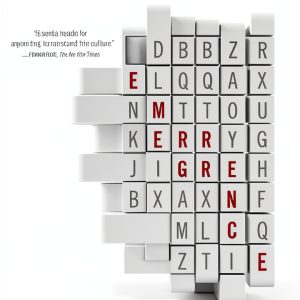 Scribner Kindle Book System Theory Physics Information